
Chances are any such disruption will not occur on the major shipping lanes but on some edge of the ocean between India and China. Even if there is no actual disruption, the costs of averting one can be punitive. The setting for this is provided by the energy shortage both countries face, says Subhomoy Bhattacharjee.

Ferrying migrant workers back to their states would be the largest special service by any railway network in the world in one go. Here's how the transporter manages it.

The government hopes to use this data to assess the extent of financial support needed to recover from the pandemic.

Making water available is always a serious challenge in the summer for all public authorities. This year, the challenge is higher when hand-washing at every opportunity has become a necessity. So keeping potable water lines running without a glitch has become most necessary.

Days after cutting the salaries and other allowances of MPs and ministers, the government has passed instructions to all departments to reduce their expenditure by as much as 60 per cent from their first-quarter spending plans.

'We expect the movements to come down to a trickle or even to stop at all these places,' says NDRF DG Satya Pradhan.

'We regularly distribute the copies of these speeches to various dignitaries, as well as to schools and colleges on various occasions,' said a source aware of the development, and these could also be distributed at all the quarantine centres across the country.

To address the supply crunch, CII has suggested leveraging the existing excess capacity in the Indian industry; rolling back import duty hike to look for alternative sources of imports; expanding credit to manufacturing units with quick loan sanctions, and one-time emergency waiver of non-performing asset regulations for three months.

Since no insurance companies share data on their claims with each other, the finance ministry and Irdai suspect that a lot of the resultant claims are duplicates.
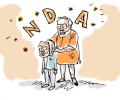
'The AMs are a different beast and reflect the political play within the government.' 'Prime Minister Modi does not need to assuage any interest group to take the final call on any decision that belongs rightfully to the Cabinet,' points out Subhomoy Bhattacharjee.
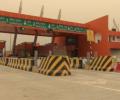
While the most obvious beneficiary of this roll-out will be manufacturers of FASTags, or the Radio Frequency Identification chips, a PwC report says implementation of a pan-India electronic toll collection system on national highways may help save approximately Rs 87,000 crore annually.

At the end of October, Sri Lanka President Maithripala Sirisena handed over the deeds for the transfer of 116 hectares in Colombo Port City to China Harbour Engineering Company on a 99-year lease to build a financial centre.

The Ola Money and Uber tie-ups demonstrate how insurance companies, including even government-run ones, are forging partnerships with every possible service company to offer products.

Right from the early days of liberalisation, there have been political controversies surrounding several cases that landed on the FIPB table and which, in turn, have often led to court battles.

As a percentage of the aggregate Budget expenditure, it is 12 per cent.
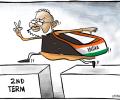
By creating groups of secretaries, the Modi government has precluded the need for groups of ministers, which were so ubiquitous in the first decade of this century in New Delhi. Each group will have a leader who will be expected to steer the schemes for implementation, cutting through the ministerial turf battles.

FinMin does not expect tax or non-tax revenue to reach anywhere close to the targets set in the interim Budget. Sources say that the challenge before the new government will be either to accept the reduced projection and tailor the Budget accordingly or set a more ambitious target.
The RBI is understood to be dithering since it would want more clarity on the cost of the fiscal policies the new government would undertake before it decides to cut rates, even though it has pencilled in a lower gross domestic product growth rate for this fiscal year.

The Modi government has handled inflation far better than any government in the past two decades. Both the stock market and currency indices have begun to show confidence in the economy, despite the mounting global headwinds of trade.

The results are likely to please the Indian government, which has been trying to impress on domestic and foreign investors about its efforts to improve the ease of doing business.
